




Research On The Purification Of Recombinant Monoclonal Antibodies
 Oct 15, 2026|
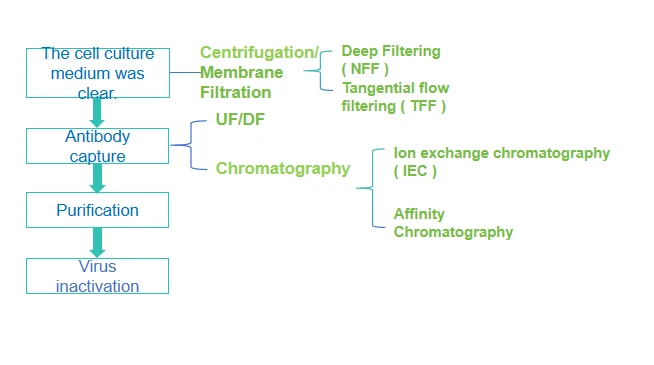
With the development of large-scale mammalian cell culture technology, industrial cell culture media volumes can reach over 10,000 liters, and antibody expression levels can reach over 5 g/L. This has greatly increased the pressure on downstream purification of recombinant monoclonal antibodies, making downstream purification a major factor limiting the industrial-scale expansion of recombinant monoclonal antibodies. The purification of recombinant antibodies generally involves processes such as cell culture medium clarification, antibody capture, antibody purification, and virus inactivation.
Clarified cell culture medium
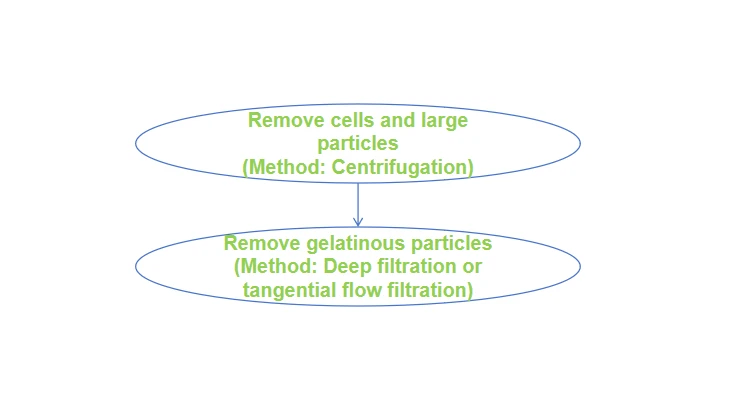
During cell culture, the culture medium contains not only recombinant monoclonal antibodies but also a large number of cell particles, debris, organelles, and cellular DNA . Industrial-scale clarification of cell culture medium typically involves two steps : centrifugation to remove cells and deep filtration or tangential flow filtration to remove colloidal particles from large particles .
The first step in the process is usually centrifugation. Centrifugation removes cells and cell debris from the culture medium, significantly reducing the load on subsequent deep filtration or microfiltration steps. Centrifugation can be performed in batch or continuous flow modes. Batch processing is suitable for laboratory scales, while continuous flow can handle larger volumes of culture medium and is more suitable for industrial-scale operations.
Deep filtration and tangential flow microfiltration are typically used as the second step in the clarification process. For large-scale purification, deep filtration handles a relatively small volume, while tangential flow filtration offers greater processing capacity. However, deep filtration is convenient, clean, and efficient, and is widely used in the industrial purification of recombinant monoclonal antibodies. Deep filtration is a heterogeneous separation process, allowing the feed solution to pass through the entire porous medium rather than just the surface, and it effectively prevents clogging of downstream chromatography columns.
Antibody capture
The purpose of capture is to concentrate and obtain high-purity proteins, a step that typically uses tangential flow ultrafiltration with ion exchange or affinity chromatography.
Tangential flow ultrafiltration is a crucial pretreatment unit in antibody capture processes. Based on the principle of cross-flow filtration, it can retain large antibody molecules while removing small molecule impurities, achieving antibody protein concentration and enrichment, reducing feed volume, and lowering the load on subsequent chromatography columns. Simultaneously, it performs buffer replacement, adjusting the feed solution to suitable pH and conductivity conditions for chromatography, removing interfering substances such as culture medium metabolites and small molecule salts, completing preliminary impurity removal, and reducing the pressure on downstream chromatography separation. This step mainly serves to concentrate, change the buffer, and pre-remove impurities, laying the foundation for subsequent chromatographic purification to obtain high-purity antibodies.
Ion exchange is the most commonly used chromatographic technique for separating and purifying proteins. It features high capacity, long lifespan, and low cost, and is simple and easy to control. However, it typically only purifies proteins to moderate purity. Affinity chromatography, on the other hand, captures antibodies based on the reversible and specific interaction between proteins and ligands, with high specificity being its main characteristic. One-step purification using affinity chromatography not only yields targeted, high-yield antibodies but also removes a large amount of host cell proteins and DNA from the cell culture medium. Furthermore, various antibody types can find corresponding affinity packing materials. Currently, affinity chromatography has become the primary choice for recombinant monoclonal antibody purification.
Antibody purification
Although affinity chromatography can quickly remove a large number of impurities, it is difficult to remove these impurities to below the specified concentration. Subsequent purification chromatographic methods, such as cation exchange chromatography (CEX), anion exchange chromatography (AEX), and hydrophobic interaction chromatography (HIC), can be used to remove impurities such as host cell proteins, high molecular weight polymers, DNA, endotoxins, and shed affinity ligands.
Virus inactivation
Low pH incubation is a common method for virus inactivation during recombinant monoclonal antibody purification, but adjusting to a low pH can easily lead to antibody inactivation and aggregation. Studies have shown that adding arginine to the system can stabilize the monoclonal antibody and inhibit aggregation. If turbidity and precipitation occur during pH neutralization, filtration with 0.45 μm or 0.22 μm membranes can be used, or the precipitate can be removed by deep filtration. Furthermore, non-enveloped viruses such as mouse parvovirus are highly resistant to chemical reagents and require physical removal methods; adsorption and small-pore membrane filtration are widely used. Virus removal filters are the core equipment in this step, and are divided into retrovirus-grade ( particle size cutoff <50 nm) and parvovirus-grade ( particle size cutoff <20 nm) filters, which can effectively remove virus particles through physical sieving.